
Building savings doesn’t require big incomes or complicated strategies—just a few straightforward habits, supported by consumer protections from federal regulators. This article breaks down how anyone in the US, even first‑time savers, can use safe, proven tactics to grow their savings month by month while avoiding common fees and pitfalls.
1. Make Pay‑Yourself‑First Automatic
One of the easiest ways to grow savings is to automate your contributions. Direct deposit into an FDIC-insured savings account—setting aside a small portion from each paycheck before you spend on anything else—builds your cushion steadily over time. Even small repeated deposits can add up. Many people find this method lessens the temptation to spend what they plan to save.
The FDIC recommends this technique because it forms a consistent habit and makes saving less of a decision each month. Consider setting up recurring transfers for similar effect if your pay isn’t direct deposited.
Remember: Savings add up, even with modest amounts.
Sources: Starting Small Can Lead to Big Savings | FDIC.gov.
2. Keep Savings Separate
It’s easier to avoid dipping into your savings when those funds are in a different account than your daily spending money. Use a separate FDIC-insured account for your emergency fund or specific goals. This extra step can help create a mental barrier against unnecessary withdrawals.
For longer-term needs, consider Certificates of Deposit (CDs) or U.S. Savings Bonds, which may offer additional restrictions or motivation to leave the money untouched. Having savings ‘buckets’ for different goals helps you stay organized and on track.
Sources: Starting Small Can Lead to Big Savings | FDIC.gov.
3. Track, Celebrate, and Build Habits
Seeing your savings grow—even if only a little bit at a time—can reinforce the habit. Set clear goals for what you’re saving for and track your progress regularly. CFPB suggests celebrating milestones along the way, like hitting a new balance or finishing a month of on‑track contributions.
This type of positive reinforcement helps make saving money feel rewarding instead of a chore.
Sources: An essential guide to building an emergency fund | Consumer Financial Protection Bureau.
4. Use Occasional Windfalls to Boost Savings
Tax refunds, work bonuses, or gifts can make a big impact on your savings if you add some or all of them to your dedicated account as soon as you receive them. According to the CFPB, using these one-time cash opportunities is an effective way to accelerate savings without changing your regular lifestyle or budget.
Sources: An essential guide to building an emergency fund | Consumer Financial Protection Bureau.
5. Check Truth in Savings Disclosures
Before opening any savings account, federal law (Regulation DD, Truth in Savings Act) requires banks and credit unions to clearly disclose how interest is calculated, compounding method, fees, and any minimum balance requirements.
Always review these disclosures carefully so you understand exactly how your money will grow—and what charges you could face. These rules protect you from unpleasant surprises or misleading advertising.
Sources: VI-3 Truth in Savings | FDIC.gov.
6. Avoid Fees by Choosing the Right Account
Banks must list all fees up front, including monthly maintenance, overdraft, and low-balance fees. Oftentimes, you can avoid monthly fees by signing up for direct deposit, using paperless statements, or keeping your balance above a minimum threshold.
Ask your bank about available options to waive fees, and consider accounts that best fit your banking habits. Some accounts are specifically designed to be low-cost or fee free, especially if you do not need frequent access to the money.
Sources: Overdraft and Account Fees | FDIC.gov.
7. Use Savings Planning Tools
The CFPB offers free handouts and workbooks that can help you set up your savings plan, pick the right account, and track your progress. Resources like “Saving,” “Finding a place for savings,” and “Saving at tax time” can guide your planning and decision-making.
These tools are publicly available and do not require you to share personal financial details. They are designed to help you find practical, safe ways to increase your savings confidence.
Sources: Your Money, Your Goals toolkit | Consumer Financial Protection Bureau.
8. Adjust Your Savings as Debts Shrink
It’s fine to start small. Over time, as you pay down loans or credit card balances, try to increase your monthly savings contributions. The FDIC encourages this gradual growth; as debt payments drop, more income becomes available for building your emergency fund or achieving other goals.
Remember: Every saver’s timeline is different, and it’s okay to adjust at your own pace.
Sources: Starting Small Can Lead to Big Savings | FDIC.gov.
9. Match Accounts to Your Goals
Consider using different accounts or products depending on your savings goals. For an emergency fund, a standard FDIC-insured savings account allows fast access. For long-term savings, CDs, bonds, or accounts restricted for health or education can be a good fit—though those come with special rules or limitations.
Always review any requirements for access or penalties before choosing where to keep your savings.
Sources: Starting Small Can Lead to Big Savings | FDIC.gov.
10. Set Up Alerts to Monitor Balances and Avoid Overdrafts
To help avoid unpleasant fees, consider signing up for low-balance alerts or notifications from your bank or credit union. These reminders can warn you before your account drops too low, giving you time to adjust and avoid overdraft or failed transfer fees.
The CFPB recommends regularly checking account activity, especially if you have recurring payments or transfers set up.
Sources: An essential guide to building an emergency fund | Consumer Financial Protection Bureau.
Key takeaways
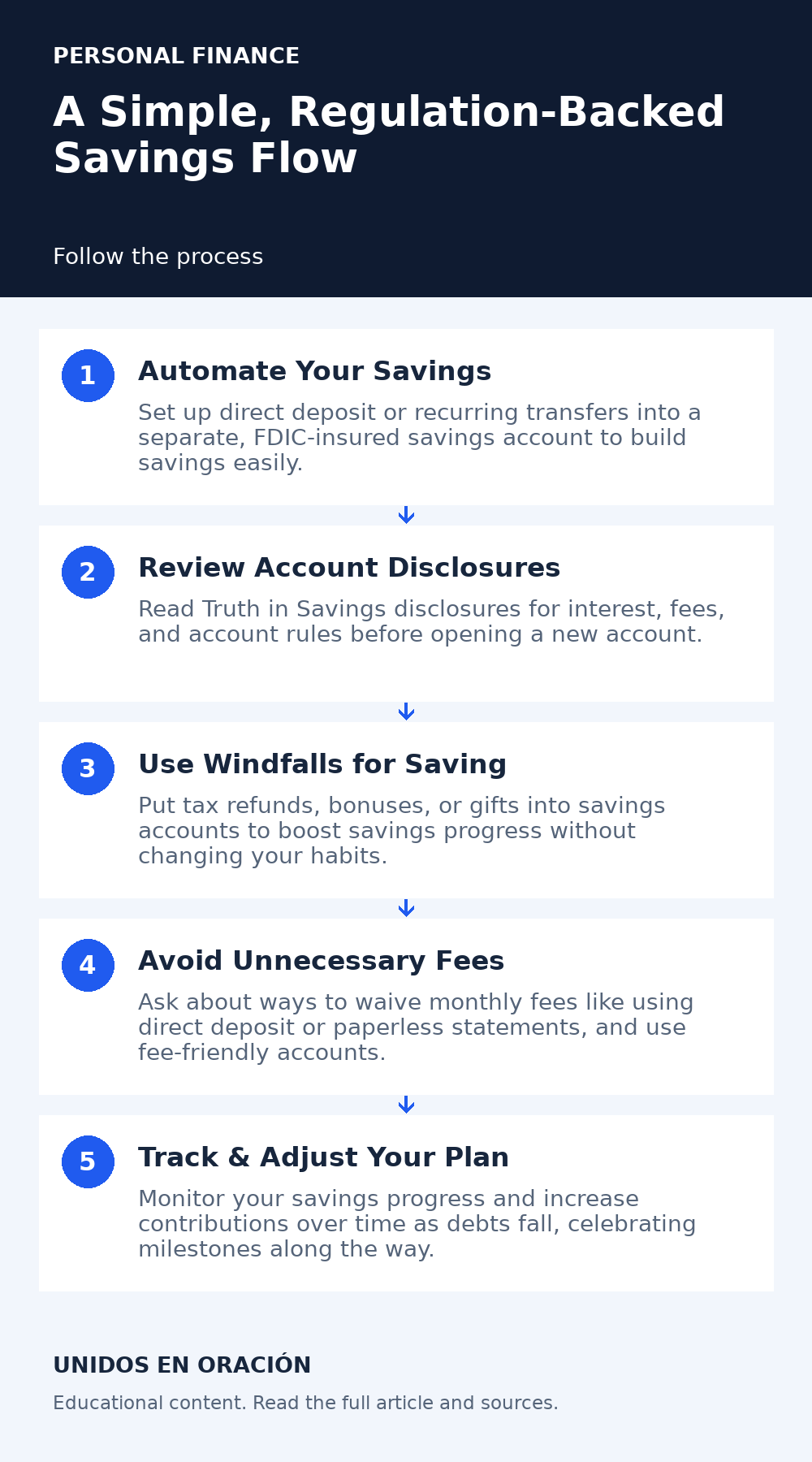
- Automate Your Savings: Set up direct deposit or recurring transfers into a separate, FDIC-insured savings account to build savings easily.
- Review Account Disclosures: Read Truth in Savings disclosures for interest, fees, and account rules before opening a new account.
- Use Windfalls for Saving: Put tax refunds, bonuses, or gifts into savings accounts to boost savings progress without changing your habits.
- Avoid Unnecessary Fees: Ask about ways to waive monthly fees like using direct deposit or paperless statements, and use fee-friendly accounts.
- Track & Adjust Your Plan: Monitor your savings progress and increase contributions over time as debts fall, celebrating milestones along the way.
Putting it into practice
Saving money becomes much more manageable—and much less risky—when you rely on trusted automation, clear disclosures, and simple tools. Start with whatever amount you’re able to set aside, review your account terms regularly, and use publicly available planning resources to help build a habit you can sustain for years to come.
Sources and further reading
- Starting Small Can Lead to Big Savings | FDIC.gov
- An essential guide to building an emergency fund | Consumer Financial Protection Bureau
- VI-3 Truth in Savings | FDIC.gov
- Overdraft and Account Fees | FDIC.gov
- Your Money, Your Goals toolkit | Consumer Financial Protection Bureau
Research date: September 11, 2026. Educational information, not personalized financial advice. Rules and product terms can change; confirm them with the provider. Prepared with AI assistance.