
Many beginner financial tips focus on strict rules or complex strategies, but there’s a powerful habit you can start today: making sure every dollar you spend and save reflects what really matters to you. This approach, highlighted by federal financial regulators, puts your goals and values at the center of your money habits. Here’s how you can begin building a financial life that supports what you care about—no matter your starting point.
Why Values Matter in Personal Finance
Sound money habits are not just about following rules or comparing yourself to others. According to the Consumer Financial Protection Bureau, the heart of building good financial habits is aligning your daily spending and saving with what’s important to you. This means working toward your financial goals—not those of your friends, family, or social media. By focusing on your values, you’re less likely to make choices you’ll regret or chase trends that don’t fit your real needs. It’s about resisting outside pressure and making mindful decisions, so your money supports the life you want.
Reflecting on your personal values can help clarify priorities. For some, security and peace of mind matter most. For others, it’s supporting family, furthering education, staying healthy, or gaining new experiences. Beginning with clear values makes every finance decision more intentional.
Sources: Financial habits and norms | Consumer Financial Protection Bureau.
Take a Values Inventory: A Simple Exercise
Before building a budget or changing any spending habits, take some time to note your financial goals and what you truly value. Make a list of what's important to you—such as saving for emergencies, traveling, learning new skills, or helping others. Next, look at a few recent purchases or expenses. Ask yourself: Did these support my values, or were they made out of habit or peer pressure? This reflection helps you identify where your money is going and whether it matches what you care about most.
Sources: Financial habits and norms | Consumer Financial Protection Bureau.
How to Build a Value-Aligned Budget
Budgeting doesn’t have to be overwhelming. Start by listing your total monthly income, using pay stubs or bank statements. Next, record every monthly expense—housing, food, subscriptions, entertainment, savings, and so on. Consumer.gov recommends subtracting your expenses from your income to make sure you can cover your needs.
Now, take it a step further: label each expense as 'values-aligned' or 'nonessential.' For example, if fitness is a priority and you use your gym membership, that might be aligned. If a streaming service goes unwatched, it may not be. This can help you find expenses to reduce or redirect toward savings or goals that are truly important to you.
Tracking your budget monthly makes it easier to spot patterns and decide where your money habits support your values—and where you might want to adjust.
Sources: Making a Budget | consumer.gov.
Automate Savings to Support Your Goals
One way to make your values stick is to automate positive habits. According to guidance from the FDIC, you can set up automatic transfers to move a portion of each paycheck into an FDIC-insured savings account or even an individual retirement account (IRA) if that aligns with your long-term goals. Even starting with a small amount—such as the money you redirect from a non-aligned expense—can help you build savings gradually without having to remember each month.
Automating this process is sometimes called 'paying yourself first.' It reduces the temptation to spend on things that don’t matter to you, making the habit more consistent and less effortful. Just make sure any account you use is insured and that you understand any account fees or restrictions before automating transfers.
It's important to note that automating savings does not guarantee specific results, but it can help build discipline over time.
Sources: Starting Small Can Lead to Big Savings | FDIC.gov.
Review and Adjust Regularly
The process doesn’t stop once you create a budget or set up automation. At the end of each month, review your spending and saving to see how well they matched your values and goals. If some money slipped into nonessential spending, consider adjusting your automation—perhaps scheduling savings after each paycheck instead of monthly, or tweaking categories in your budget.
Flexibility and regular check-ins help keep your financial habits sustainable and relevant, even as your values or priorities evolve. If you find your values shifting or new needs arising, adjust your plan accordingly.
Sources: Making a Budget | consumer.gov; Starting Small Can Lead to Big Savings | FDIC.gov.
Early Habits Lead to Long-Term Benefits
Building these value-based habits early has benefits that go beyond monthly budgets. According to FDIC research, people who receive financial education early in life are more likely to build healthy banking relationships and avoid living without a bank account. Access to insured accounts and regular saving helps protect your money and makes it easier to reach long-term goals.
Even simple habits like saving automatically and using a budget can set the stage for improved financial inclusion and security over time.
Sources: Youth Financial Education and Its Impact on Adult Financial Decisions | FDIC.gov; Starting Small Can Lead to Big Savings | FDIC.gov; Making a Budget | consumer.gov.
Risks, Fees, and Cautions
While aligning your spending with personal values is a positive habit, it’s important to remember that it won’t guarantee specific financial outcomes. Automated transfers can sometimes result in overdraft fees if your account balance runs low, so be sure to check your balance and know your account’s policies.
When opening new financial accounts, always confirm that they are federally insured and understand any fees that might apply, such as minimum balance requirements or monthly service charges. If you are considering options like an individual retirement account (IRA), carefully review the account terms or seek professional advice to make sure it fits your needs.
Lastly, remember that habits take time to build and maintain. Be patient with yourself as you make changes, focusing on progress rather than perfection.
Sources: Starting Small Can Lead to Big Savings | FDIC.gov; Making a Budget | consumer.gov; Financial habits and norms | Consumer Financial Protection Bureau.
Key takeaways
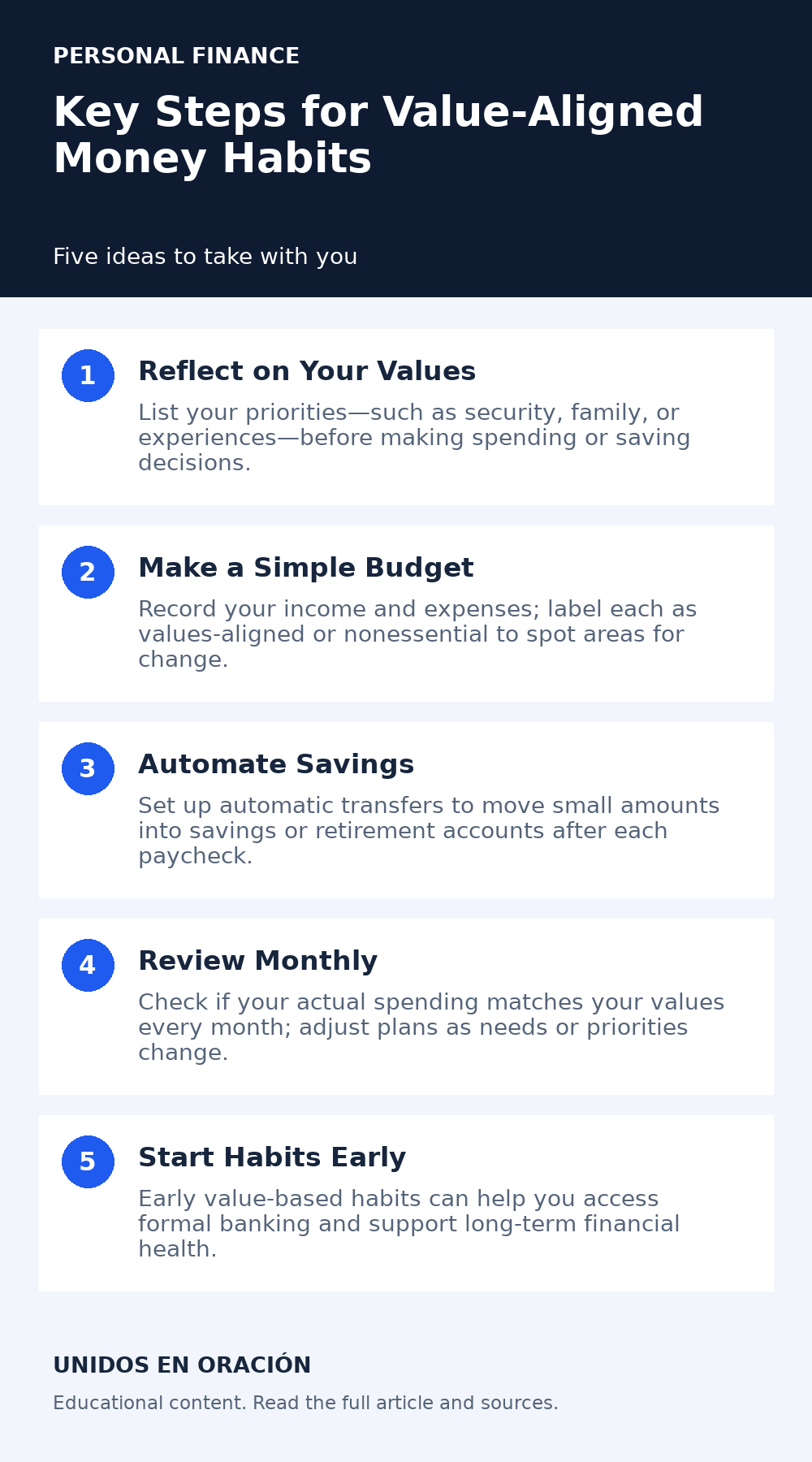
- Reflect on Your Values: List your priorities—such as security, family, or experiences—before making spending or saving decisions.
- Make a Simple Budget: Record your income and expenses; label each as values-aligned or nonessential to spot areas for change.
- Automate Savings: Set up automatic transfers to move small amounts into savings or retirement accounts after each paycheck.
- Review Monthly: Check if your actual spending matches your values every month; adjust plans as needs or priorities change.
- Start Habits Early: Early value-based habits can help you access formal banking and support long-term financial health.
Putting it into practice
Aligning your spending and saving with your personal values can make financial habits more meaningful and sustainable. By reflecting on your goals, building a simple budget, automating positive actions, and reviewing your progress regularly, you create a system that focuses on what matters most to you—not just on what others say you “should” be doing. This mindset can set the foundation for strong, flexible financial habits, regardless of your income or starting point.
Sources and further reading
- Starting Small Can Lead to Big Savings | FDIC.gov
- Financial habits and norms | Consumer Financial Protection Bureau
- Youth Financial Education and Its Impact on Adult Financial Decisions | FDIC.gov
- My Money Five | MyMoney.gov
- Making a Budget | consumer.gov
Research date: September 11, 2026. Educational information, not personalized financial advice. Rules and product terms can change; confirm them with the provider. Prepared with AI assistance.