
Experiencing a sudden expense—like a car repair or medical bill—can catch anyone off guard. For many Americans, even a relatively small, unexpected cost can feel overwhelming. But by starting small and following clear steps, anyone can build an emergency fund that provides real peace of mind. This article guides beginners in the United States through a practical, evidence-based process to create—and preserve—an emergency fund, no matter their starting point. We’ll explain each milestone, where to keep your savings secure, and how to stick with it, using only factual research and avoiding hype.
Why the First $400 Matters
For many, the idea of building months’ worth of savings feels intimidating. That’s why the first step is so powerful: just reach $400. According to research highlighted by the Federal Reserve, many Americans can’t cover an unexpected $400 expense without borrowing or selling something. Setting this as your initial goal can help reduce anxiety around emergencies, offering a buffer that can cover some of life’s most common surprises, like a flat tire or a minor medical bill. Reaching $400 is not just practical—it’s a win that provides motivation to keep saving.
Sources: How to Build an Emergency Fund From Scratch: A Step-by-Step Path | The Money Decoded.
Building Your Fund in Stages
Rather than aiming for many months’ worth of expenses upfront, taking a step-by-step approach is both realistic and psychologically encouraging. After saving $400, the next milestone is $1,000. From there, aim to cover at least three months of essential expenses. Eventually, some experts suggest working toward a six-month fund if your situation requires it—such as if you have variable income or dependents.
Breaking it down this way makes the process less overwhelming. Both The Money Decoded and the CFPB support gradual, attainable growth, so savers don’t get discouraged or give up early. Each milestone is an achievement that protects you a little more from life’s unplanned events.
Sources: How to Build an Emergency Fund From Scratch: A Step-by-Step Path | The Money Decoded; An essential guide to building an emergency fund | Consumer Financial Protection Bureau.
Choosing a Safe, Accessible Account
Where you keep your emergency fund matters. The safest place for most beginners is in a federally insured savings account—like those protected by the FDIC, which insures up to $250,000 per depositor per institution. This means your money is protected against bank failure (up to the coverage limit).
Additionally, many banks now offer high-yield savings accounts with much better interest rates than typical accounts. For instance, while the national average savings APY in 2026 was about 0.38%, some high-yield options were offering around 4%. While these rates can change, placing your funds in a high-yield, FDIC-insured savings account allows your money to earn more—without locking it away or exposing it to higher risks that come with investments.
Remember, always check that your chosen account is federally insured, and beware of any fees or restrictions that could limit access in an emergency.
Sources: Preparing Your Finances for an Unanticipated Disaster | FDIC.gov; How to Build an Emergency Fund | Treasury Learn.
Automating Your Savings
Building an emergency fund can be easier if you set up automatic transfers. The CFPB recommends moving money from your checking account to your emergency fund on a regular basis. This could be as simple as setting a fixed monthly transfer, or using tools that automatically round up purchases or split a portion of your paycheck toward savings.
Automating savings helps minimize the effort and the temptation to skip months, making steady progress more likely. Some apps and banks support features like round-ups or scheduled transfers, so your savings grow with minimal manual work. This piggy-backing on everyday behavior can help you reach that first $400—and beyond—without feeling deprived.
Sources: An essential guide to building an emergency fund | Consumer Financial Protection Bureau; How to Build an Emergency Fund from Zero.
Deciding What Counts as an Emergency
An emergency fund is meant for true, necessary surprises—not planned spending or regular bills. The Consumer Financial Protection Bureau suggests writing down what you personally consider an emergency, such as car repairs, medical expenses, or essential home repairs. This helps avoid dipping into savings for things like gifts or vacations.
When you do use the fund, try to rebuild it as soon as possible. Being clear about your own emergency criteria protects your progress and ensures the fund is there for the next true need.
Sources: An essential guide to building an emergency fund | Consumer Financial Protection Bureau.
A Few Important Reminders
Interest rates on high-yield savings accounts can change frequently. The examples above are based on mid-2026 rates, but you should compare current offerings when choosing an account. Never choose an account based only on last year’s numbers.
FDIC insurance covers up to $250,000 per depositor, per institution. If your fund might exceed that, look into using more than one bank or different types of accounts, but check reputable sources before acting.
Not everyone’s needs are the same. Factors like job security, number of dependents, and essential monthly costs will affect how much you should aim for beyond the initial milestones. Consider your unique situation and consult trusted resources if you’re unsure.
This guide is educational, not personalized advice. For decisions specific to your life, consult an official source or a qualified financial professional.
Sources: Preparing Your Finances for an Unanticipated Disaster | FDIC.gov; How to Build an Emergency Fund | Treasury Learn; An essential guide to building an emergency fund | Consumer Financial Protection Bureau.
Key takeaways
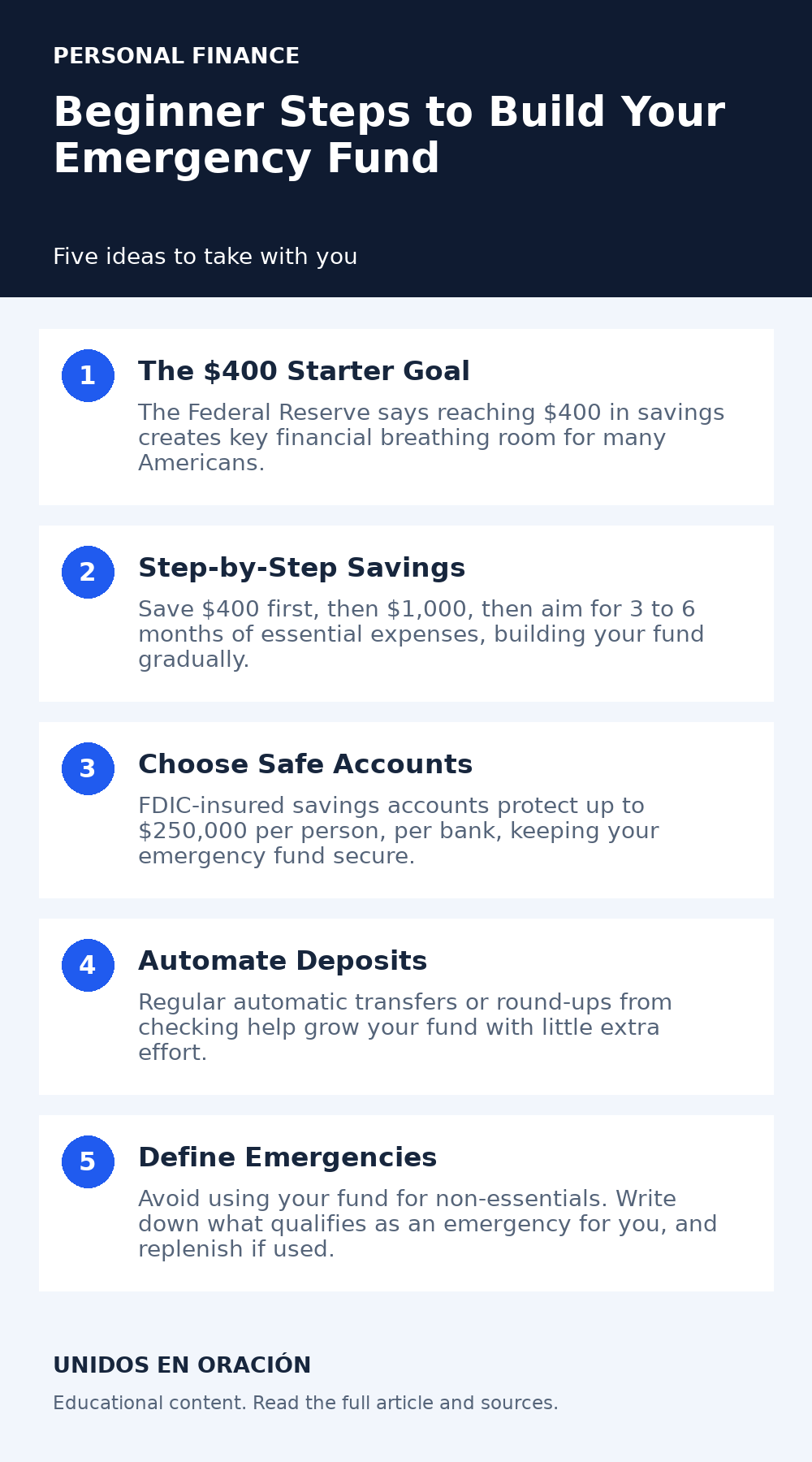
- The $400 Starter Goal: The Federal Reserve says reaching $400 in savings creates key financial breathing room for many Americans.
- Step-by-Step Savings: Save $400 first, then $1,000, then aim for 3 to 6 months of essential expenses, building your fund gradually.
- Choose Safe Accounts: FDIC-insured savings accounts protect up to $250,000 per person, per bank, keeping your emergency fund secure.
- Automate Deposits: Regular automatic transfers or round-ups from checking help grow your fund with little extra effort.
- Define Emergencies: Avoid using your fund for non-essentials. Write down what qualifies as an emergency for you, and replenish if used.
Putting it into practice
Building an emergency fund can seem daunting at first, but starting with a small, achievable milestone like $400 makes it manageable. By progressing in steps, keeping your money in a safe account, automating your efforts, and remaining clear about what counts as an emergency, you can gradually gain financial security. Remember, this process is about building confidence and resilience over time. Use these practical steps, check updated information regularly, and stay focused on progress—not perfection.
Sources and further reading
- How to Build an Emergency Fund From Scratch: A Step-by-Step Path | The Money Decoded
- An essential guide to building an emergency fund | Consumer Financial Protection Bureau
- Preparing Your Finances for an Unanticipated Disaster | FDIC.gov
- How to Build an Emergency Fund | Treasury Learn
- How to Build an Emergency Fund from Zero
Research date: September 11, 2026. Educational information, not personalized financial advice. Rules and product terms can change; confirm them with the provider. Prepared with AI assistance.