
If you’re thinking about putting money into Bitcoin or other cryptocurrencies, it’s important to understand how these assets compare with more traditional investments like stocks and bonds. While both crypto and traditional investments offer opportunities, they differ significantly in terms of regulation, risk, consumer protections, and how U.S. regulators treat them. This article covers what the official rulebooks say, what risks to watch out for, and what questions beginners should always ask before investing.
What Does U.S. Law Say About Bitcoin and Crypto?
Bitcoin is classified by the U.S. Commodity Futures Trading Commission (CFTC) as a commodity. This means that while certain complex crypto products like futures are regulated, the basic buying and selling of Bitcoin often happens in marketplaces with limited federal oversight. The CFTC does have anti-fraud powers, but the direct spot market often lacks regulation.
The U.S. Securities and Exchange Commission (SEC) issued updated guidelines in April 2026. They explain that some crypto assets can be regulated as securities, depending on their specific characteristics, such as if they are offered to the public for investment and fit the 'investment contract' standard. Other digital assets might instead be considered commodities or digital tools. Always check how an asset is classified, as this determines which protection or rules might apply.
Sources: Customer Advisory: Understand the Risks of Virtual Currency Trading | CFTC; 2026-05635 | CFTC; SEC.gov | Crypto Assets and the Federal Securities Laws.
Volatility: Crypto vs. Traditional Investments
Bitcoin and other cryptocurrencies are known for their dramatic price swings. Their prices can rise and fall significantly in very short periods, much more than what you typically see with stocks or bonds. Regulatory bodies, including the Federal Reserve, emphasize that most people currently buy crypto for speculation—not for everyday spending. This means that investing in Bitcoin is often more unpredictable than investing in more established markets like stocks, bonds, or mutual funds.
Sources: Customer Advisory: Understand the Risks of Virtual Currency Trading | CFTC; “Crypto assets are highly volatile (…) They’re more of an asset for speculation, so they’re not particularly in use as a means of payment. It’s more of a speculative asset. It’s essentially a substitute for gold rather than for the dollar”.
Consumer Protections and Insurance
Traditional investments offer some protections. Bank accounts have FDIC insurance, and brokerage accounts usually have coverage from SIPC. These federal programs help protect your money if a bank or broker fails. In contrast, cryptocurrency holdings are not federally insured. If a crypto exchange is hacked, fails, or you lose your credentials, there may be no way to recover your funds. Crypto transactions are generally permanent and irreversible, and U.S. regulators warn there are few legal options if things go wrong.
Sources: What To Know About Cryptocurrency and Scams | Consumer Advice.
Fraud Risks and Regulatory Warnings
There are many scams and fraudulent activities targeting people interested in crypto. The CFTC warns about fake exchanges, scams involving new coin offerings that mislead about possible gains, and pyramid schemes. U.S. regulators strongly emphasize that there are no guaranteed investment strategies in crypto. Always verify if those offering crypto investments are registered with the SEC or CFTC, and be suspicious of anyone promising high, risk-free returns.
Sources: Customer Advisory: Understand the Risks of Virtual Currency Trading | CFTC; Customer Advisory: Use Caution When Buying Digital Coins or Tokens | CFTC.
Accessing Crypto Through Funds
Some investment funds, like ETFs and mutual funds, offer exposure to crypto, particularly through Bitcoin futures. These funds are required to follow certain rules about liquidity, pricing, and how they hold your assets. Still, funds that include crypto are subject to the volatility and regulatory complexity of these assets. Even with these layers of protection, you are not insulated from the main risks of holding Bitcoin through traditional investment products.
Sources: CFTC/SEC Investor Alert: Funds Trading in Bitcoin Futures | CFTC.
Questions Beginners Should Always Ask
Before investing in any asset, consider asking: Is this product registered with a regulator? Who oversees the platform or product? What protections exist if things go wrong? These questions, suggested by the SEC, are an important step for anyone—especially when considering the difference between regulated and less-regulated investments.
Sources: SEC.gov | Ask Questions.
Important Caveats and Reminders
Not all assets carry the same protections. If an asset is not called a security or commodity by federal regulators, it might receive little or no oversight. U.S. regulatory positions can change, as seen in SEC guidance updates in 2026. Fees and costs for trading crypto can also be higher and less transparent than with traditional investments. Remember, this article is for informational purposes only and does not provide specific investment advice.
Sources: 2026-05635 | CFTC.
Key takeaways
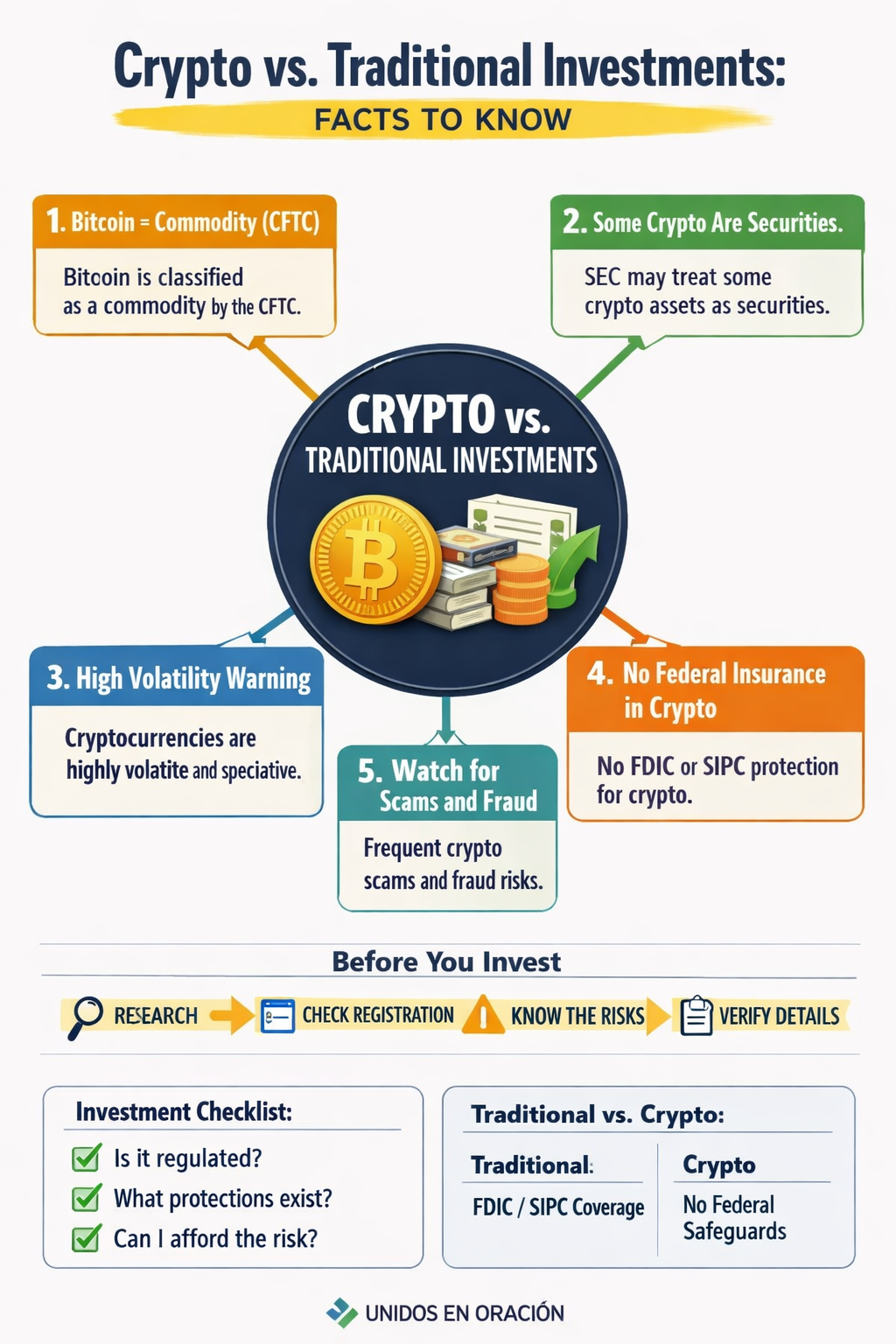
- Bitcoin = Commodity (CFTC): The CFTC considers Bitcoin a commodity; spot exchanges may lack full federal oversight.
- Some Crypto Are Securities: SEC rules say some crypto assets may be securities, depending on how they're offered and used.
- High Volatility Warning: Cryptocurrencies are much more volatile than stocks or bonds and are mainly speculative.
- No Federal Insurance in Crypto: Crypto accounts aren’t protected by FDIC or SIPC. Losses from hacks or error are permanent.
- Watch for Scams and Fraud: U.S. regulators warn of frequent crypto scams and stress there are no guaranteed returns.
Putting it into practice
Before putting money into Bitcoin, stocks, bonds, or any investment, understanding what the rules say, who is watching over your money, and what risks you may face is essential. Crypto and traditional investments have different levels of oversight, protection, and risk. Taking the time to learn about insurance, government supervision, and the potential for loss can help beginners make more informed choices.
Sources and further reading
- Customer Advisory: Understand the Risks of Virtual Currency Trading | CFTC
- 2026-05635 | CFTC
- SEC.gov | Crypto Assets and the Federal Securities Laws
- “Crypto assets are highly volatile (…) They’re more of an asset for speculation, so they’re not particularly in use as a means of payment. It’s more of a speculative asset. It’s essentially a substitute for gold rather than for the dollar”
- What To Know About Cryptocurrency and Scams | Consumer Advice
- Customer Advisory: Use Caution When Buying Digital Coins or Tokens | CFTC
- CFTC/SEC Investor Alert: Funds Trading in Bitcoin Futures | CFTC
- SEC.gov | Ask Questions
Research date: September 11, 2026. Educational information, not personalized financial advice. Rules and product terms can change; confirm them with the provider. Prepared with AI assistance.